If you build accounting software for small and medium businesses, it’s likely you’ve considered embedding payments at some point. But what about expense management? Not a bolt-on expense app – we’re talking about the kind of integrated experience where users can issue cards, control spending, and reconcile transactions within your platform.
You might assume this is a ‘next-year’ idea. In truth, it’s already happening. Platforms like Finway.de have embedded card issuance and expense management directly into their accounting interface. The result? Less time spent chasing receipts, and a real reduction in reconciliation admin. And for platforms like Numarqe, it started with issuing credit to SMEs via card rails – but once they had cards and controls in place, extending into expenses was a logical next step.
Before you start making design decisions, it’s worth stepping back to ask: what are the areas we need to get right if we’re going to make expense management a success? This isn’t just about product design – it’s about understanding what really matters once you go from a roadmap idea to a working experience.
What do users actually want from expenses management?
Most expense solutions centre on reimbursing employees. But in 2025, that’s not where the innovation is. The growing demand is for real-time, proactive control – pre-approved spending, not post-spend chasing. That means cards, policies, controls, and a way to manage it all without jumping between tools.
And here’s the key thing: accounting software is where many users want this to live. According to CFO Dive, 61% of SMB finance leaders name accounting and ERP software as their top “must-have” tool – far above expense tools, which rank much lower at 15%¹. That’s your opportunity: if you already own the financial core, you can become the natural home for expenses too.ers, others might only need a temporary or single-use card.
Where’s the real value in embedding it?
From the outside, it’s tempting to treat this as a UX improvement: fewer clicks, faster approvals. But look closer and you’ll find the real benefits are operational.
Today, 24% of finance teams still cite manual, time-consuming processes as a major challenge². That includes reconciling expenses with bank feeds, managing receipts in separate tools, and pushing transactions into the ledger.
Embedding cards into your platform simplifies this entire chain. You remove the guesswork of reconciliation because you own the data from the start. Your users get faster month-end close. Your product becomes more indispensable.
Why now?
Weavr’s research found that 51% of SaaS product managers are prioritising churn reduction this year³. It’s a clear signal that retention, not just growth, is the metric that matters most.
At the same time, your users are battling with SaaS bloat – juggling dozens of tools across finance, HR, and operations. Even small businesses now use upwards of 70 cloud applications⁴. It’s no wonder that 68% of finance leaders report frustration with poor integration between systems⁵.
So while AI captures headlines as the tool to ‘do more with less’, embedded finance is quietly delivering on that promise too. Without needing users to pay for or manage yet another tool, embedding expenses means your product starts doing more – helping your customers simplify their stack, cut admin, and consolidate spend.
And critically, that puts your platform in a stronger position to retain and grow its user base.
Spend controls: are you or your customers setting the rules?
Spend controls are an essential part of any expense card offer – after all, they’re how you bridge the gap between a system that’s effortless for employees and secure from misuse for employers.
For embedders – and accounting platforms planning to implement expense cards – the question you’ll need to ask is this: do we let our users set the detail of those controls, or do we set it for them?
There are pros and cons each way. If you let each individual company using your platform set their own spend controls, it gives their financial controllers all the power to configure things exactly to their company’s needs – sometimes in response to situations you can never predict.
But with that power comes a whole heap of variables. If your users set the controls themselves they’ll also have to decide on the following for each card:
- Can it be used contactlessly, online or at a cash machine?
- Can it be added to the employee’s digital wallet?
- Can the employee pay by giving the card details over the phone?
- Will it allow or decline merchant-initiated transactions?
- Will it be restricted by country, region or any other kind of geo-fencing?
Alternatively, you could keep those variables – and the complexity that comes with them – on your side of the line. Instead of letting your end users configure everything themselves, an accounting platform could offer ready-made default cards for them to adopt, like a marketing conference card or an administrator facilities card with controls predefined to suit those roles.

The “gotchas”: what haven’t we thought about?
Lastly, we come to what we call the “gotchas” – the questions that you likely won’t think to ask yourself unless you already come from the fintech world. These are less about how your users will access and use cards, and more about how you make those features work as the embedder.
3D Secure
3DS, or 3D Secure, is an extra layer of authentication that asks cardholders to verify it’s them making a payment. This is straightforward for consumer cards because the person making the payment is the cardholder. But with expense cards, the cardholder is the business, and the employee using the card is an assignee. A good system needs to enrol employees properly, so when they log into the app with two-factor authentication or biometrics, it fulfils the 3DS check.
Mobile Wallets
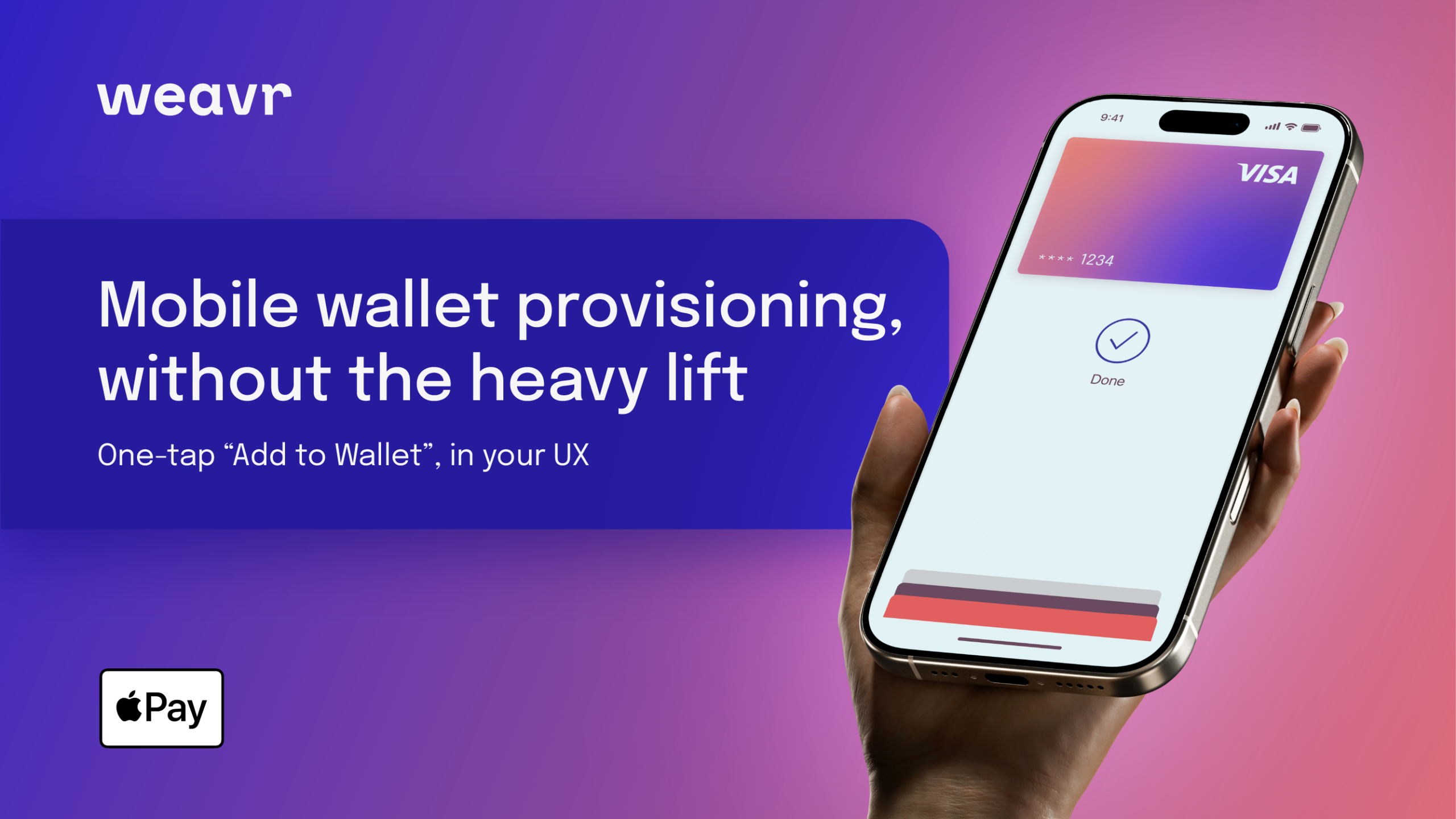
If you want end-user employees to be able to add their expense card to their Apple or Google wallet, that’s technically complex – especially on Apple’s side. Push provisioning needs to be supported out of the box. And yes, users will expect it.
Risk and rule-making
Have you considered how to manage expense cards for businesses seen as high risk by the card industry – like those in chemicals, aerospace or bankruptcy law? Perfectly legitimate, but potentially complicated when it comes to controls and onboarding. Your provider needs to help you navigate that.
Speak to us before you start
We designed our embedded finance solution to solve all of these considerations out of the box. From 3DS-compliant authentication to spend controls that can be activated with a tap, we make it easy for accounting apps to become embedders – without becoming a neobank along the way.
If you’re considering adding expenses to your platform, we’d love to help you think it through.
Footnotes
¹ CFO Dive: SMB Finance Tech Survey, 2023
² CFO Brew: Finance Process Challenges, 2023
³ Weavr: The 6% – Edition 1, 2025